(colorim%C3%A9trie%20web%20rvb).png)





In Portugal, every dwelling receives an official energy certificate, rated from A+ to F. A+ is the best grade on the scale. Here is how we reach it on our new houses, and why it changes the owner's life, from summer comfort to resale value.
The Portuguese energy certificate
The certificado energético is issued by a qualified expert, under the national certification system (SCE, managed by ADENE). It is mandatory to sell or rent a property, and it rates the dwelling's actual performance: envelope, systems, energy production. On a new build, the target class is set from the thermal project filed with the permit.
Why aim for A+
- Comfort, winter and summer. An A+ house stays temperate without overconsuming: cool in August, mild in January.
- Bills. Energy not consumed is the first source of savings over the life of the house.
- Property value. On the Portuguese market, an A-rated property sells on average 14% higher than an E-rated one at equal surface, and it sells faster.
- Bank conditions. Several Portuguese banks reserve their best terms for the best-rated homes.
The envelope: insulation and airtightness
Everything starts with the envelope. Our timber-frame walls hold a generous thickness of bio-based insulation within their very structure, without major thermal bridges. High-performance double-glazed joinery and continuity of insulation (floors, roof, junctions) complete the picture.
The second pillar is airtightness: continuous membranes, careful junctions, controlled penetrations. It is designed on the drawings and checked at the end of the build with a dedicated measurement. It makes the difference between a displayed class and a lived performance.
A+ class is decided at design stage, not at handover. Airtightness cannot be fixed afterwards: it is drawn, installed, then measured. It is a matter of method, not miracle materials.
Ventilation and summer comfort
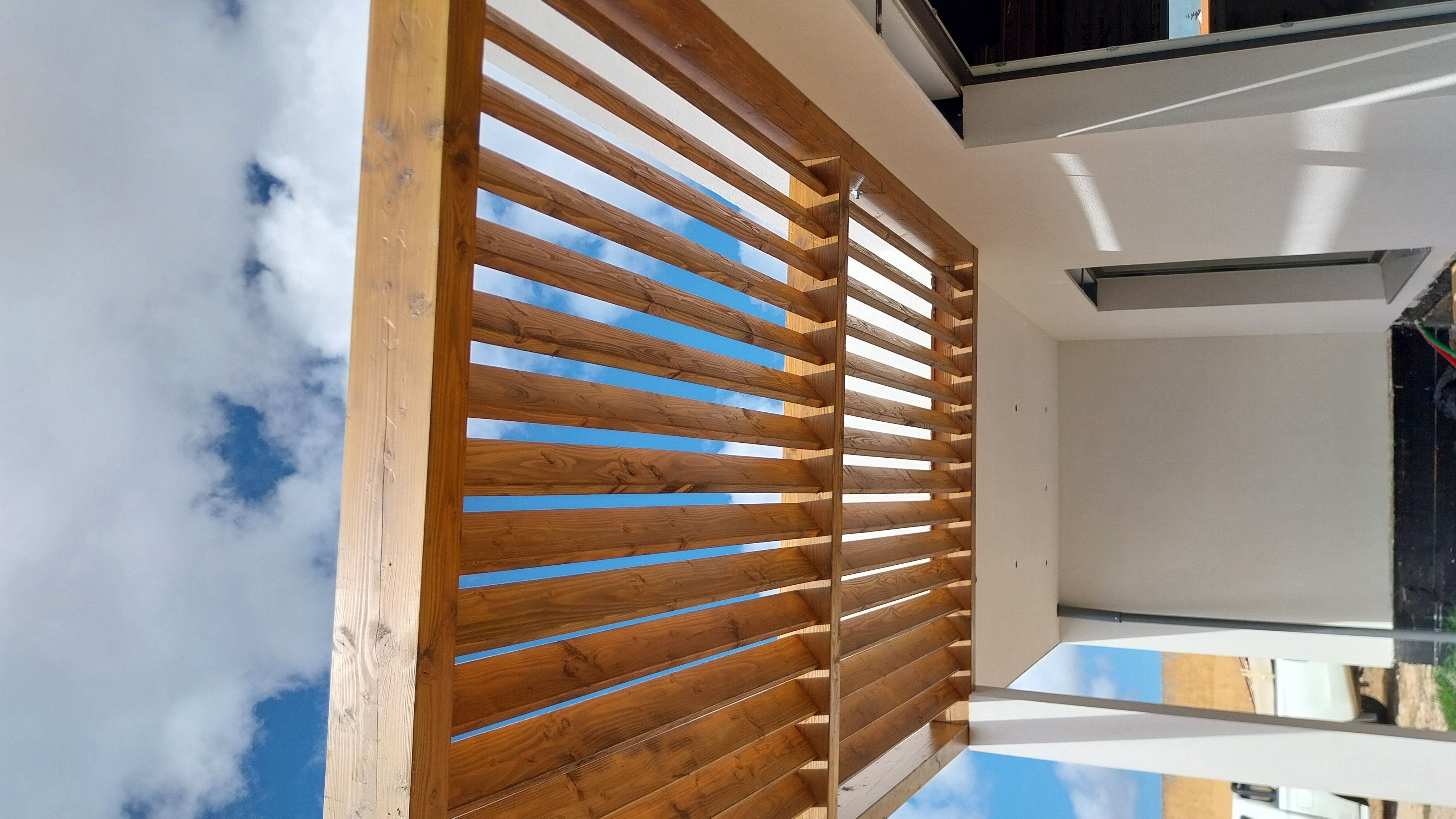
An airtight envelope requires controlled ventilation: heat-recovery ventilation renews the air while recovering the heat (or coolness) of the extracted air. For the Portuguese summer, design does the rest: solar protection (overhangs, shutters, orientation), suitable glazing and night ventilation keep the house cool without oversized air conditioning.
Equipment: produce and pilot
On a high-performing envelope, sober equipment is enough: an air-to-water heat pump for heating and hot water and, depending on the project, photovoltaics for self-consumption. The order of priorities matters: insulate first, equip second. Powerful equipment on a mediocre envelope only moves the problem to the bill.
What timber frame changes
The construction principle serves performance directly: insulation fills the wall's thickness instead of being added to it, workshop prefabrication guarantees the precision of junctions, and the dry build protects the airtightness membranes. That is why A+ class is our delivery standard, written into the contract with the other performance commitments.
Frequently asked questions
Does A+ class cost much more to build?
The extra cost lies in insulation, joinery, airtightness and ventilation. It is largely paid back through running costs, and it shows in the resale value of the property.
Is the energy certificate mandatory in Portugal?
Yes, to sell or rent a dwelling. It is issued by a qualified expert under the national energy certification system (SCE).
Can you reach A+ without air conditioning?
Yes. With an insulated, airtight envelope, well-designed solar protection and controlled ventilation, summer comfort is achieved without oversized air conditioning, including in the south.
An A+ house for your project?
Tell us your region and your brief: we explain how A+ class fits into your budget, free of charge.
Discuss my projectAlso read: why choose timber frame in Portugal · the Energy Pack for existing homes · the price of a timber-frame house.
Back to the blog