(colorim%C3%A9trie%20web%20rvb).png)





Southern heat, Atlantic humidity, a seismic zone, termites: Portugal puts any material to the test. So, is wood a good choice here? Our builder's answer is yes, provided it is built correctly. Here is why, point by point.
Wood and the Portuguese climate
Portugal means two opposite challenges: the dry heat of the interior and the Algarve, and the coastal humidity of the Atlantic. Timber frame answers both because comfort is driven from within the wall: it is the thickness and quality of the insulation that do the work, not the mass of the wall.
Against heat: a highly insulated envelope, solar protection (overhangs, shutters, orientation) and well-designed ventilation keep the house cool without overheating. Against humidity: a modern timber-frame wall is a layered system: rain screen outside, ventilated air gap behind the cladding, vapour control layer inside. Any water that could get in gets out; the wall stays dry.
Seismic zone: an asset, not a risk
Part of Portugal, including the Lisbon region and the Algarve, is seismic: the memory of the 1755 earthquake is still alive. And that is exactly where wood shines: light and flexible, it absorbs shocks by deforming slightly and springing back, where a heavy, rigid material takes everything at once.
Less mass means smaller forces at play during an earthquake. That is why timber frame is recognised as a high-performing solution in seismic zones, worldwide and in Portugal.
Termites and humidity: the builder's answer
This is the real question we get asked, and it is legitimate: southern Portugal has subterranean termites. The good news: the problem is fully under control when best practice is followed. What a serious builder puts in place:
- No wood-to-ground contact. The frame starts above a masonry base, out of reach of moisture and insects.
- Wood treated for its use class, matched to each situation (structure, outdoors).
- Anti-termite barrier, physical or physico-chemical, at the base of the walls.
- Ventilated detailing that keeps moisture from settling: humidity is the termites' ally, so we remove it.
A wooden house suffering from termites or damp is almost always a design fault (ground contact, missing ventilation), not a fatality of the material. Well-built wood crosses the decades: old roof structures are the proof.
Thermal performance and A+ class
One of the biggest everyday advantages. Timber frame leaves a generous thickness of insulation inside the wall, without major thermal bridges. Combined with good airtightness and controlled ventilation, it reaches the A+ energy class without difficulty. The concrete result: a house cool in summer, temperate in winter, and reduced energy bills, an argument that also counts for the property's value and bank conditions.
A fast, clean build
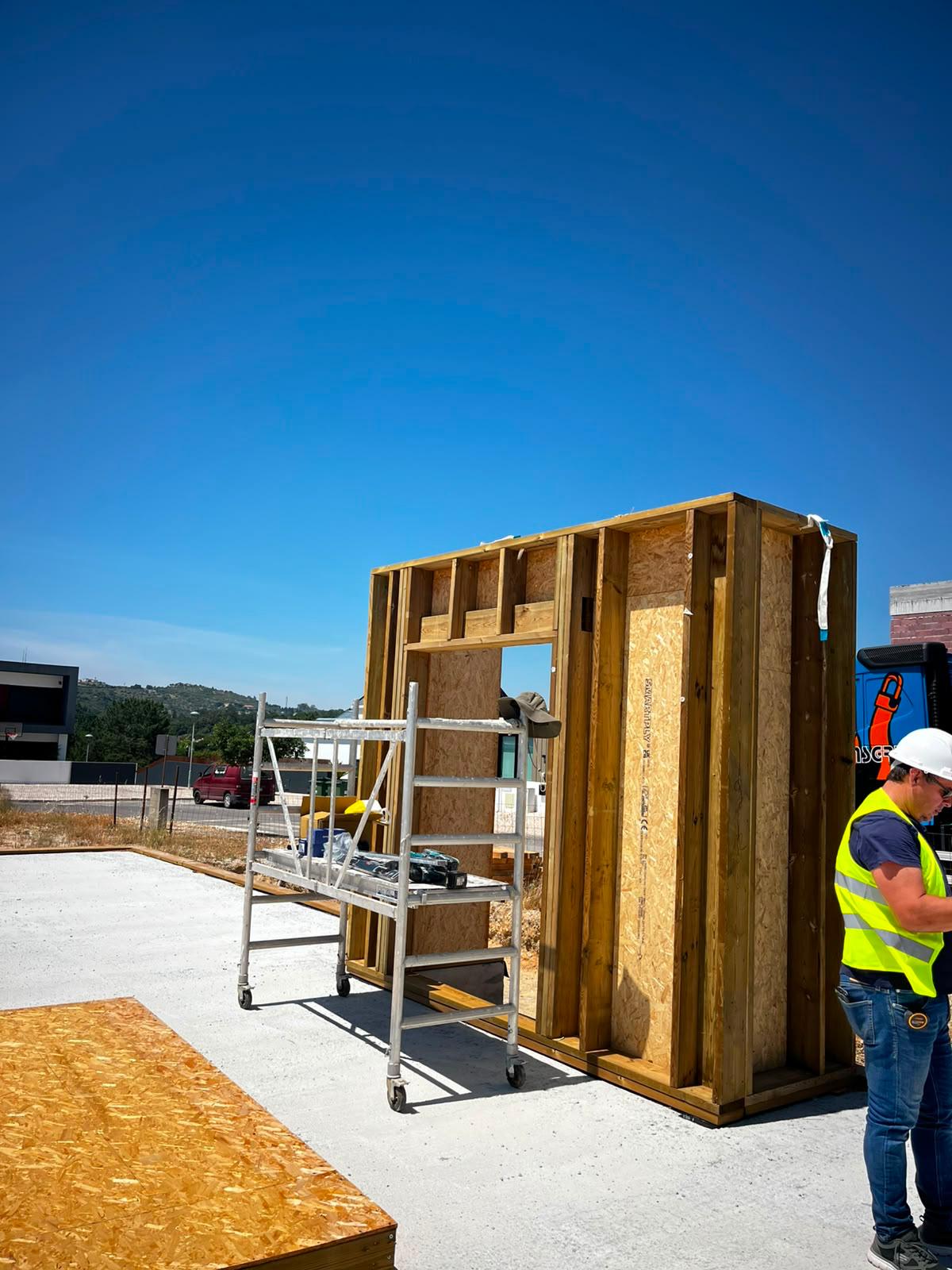
The walls are prefabricated in the workshop, under cover, with a precision traditional sites cannot match. On site, the house is weathertight in a few days. It is a dry build: few nuisances, less weather risk, and a schedule that holds. For a client building remotely from France, that predictability changes everything.
Durable, and high in value
Wood from sustainably managed forests (PEFC certification) stores carbon and has one of the best environmental footprints in construction. Beyond ecology, it is a patrimonial choice: a high-performing, healthy, well-built house sells and rents better.
Common myths, seen from the build site
- “Wood burns.” A modern timber-frame wall, lined with boards, offers high fire resistance; solid wood burns slowly and predictably, unlike other materials that fail suddenly.
- “It does not last.” Wooden buildings have stood for centuries. Lifespan depends on design, not on the material.
- “It is less solid.” At equal weight, wood is very strong. Our structures are engineered and calculated like any construction.
Frequently asked questions
Does wood resist termites in Portugal?
Yes, provided best practice is followed: wood treated for its use class, no wood-to-ground contact, masonry base, anti-termite barrier and ventilated detailing. That is the builder's job.
Does a timber-frame house withstand earthquakes?
Wood is light and flexible: it absorbs and dissipates seismic energy well, which makes it a recognised material in seismic zones such as part of Portugal.
Is wood suited to the heat of the Algarve?
Yes: with a well-insulated envelope, good airtightness, solar protection and suitable ventilation, summer comfort is excellent, including in the south.
Want to talk it through concretely?
Tell us where your land is and what you have in mind: we explain what timber frame would deliver for your project, free of charge.
Discuss my projectAlso read: the price of a timber-frame house in Portugal · our offer for private clients.
Back to the blog